

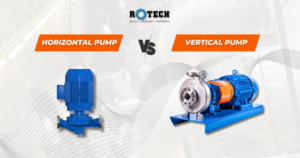
Centrifugal pumps are the workhorses of fluid transfer across almost every industry, from water treatment and chemical processing to oil and gas. They move liquids using a rotating impeller that converts kinetic energy into hydraulic pressure. But before you select a pump for your critical operation, you face a fundamental choice: should you use a horizontal centrifugal pump or a vertical centrifugal pump?
Choosing the wrong pump orientation can lead to system inefficiencies, higher operating costs, and difficult maintenance. This comprehensive guide, written by a 20-year expert in the field, will break down the core differences, advantages, and disadvantages of horizontal and vertical centrifugal pumps. We focus on the practical factors like space, priming, and maintenance—that will help you make a truly informed, high-value decision for your specific industrial application.
Understanding the Core Difference: Orientation and Design
The defining difference between these two pump types lies in the shaft’s orientation. This single design element dictates almost every other characteristic, from floor space requirements to maintenance complexity and ideal applications.
1. Horizontal Centrifugal Pumps
In a horizontal centrifugal pump, the shaft, impeller, and motor are all mounted on a common baseplate with a horizontal alignment. The pump casing is typically split axially or radially for easy access.
Shaft Orientation: Horizontal (parallel to the ground).
Footprint: Requires more floor space, but less vertical headroom.
Accessibility: Components are easily accessible for inspection, repair, and replacement.
Priming: Often self-priming or easily primed.
You can find more detailed information on their mechanics on our Horizontal Centrifugal End Suction Pumps page.
2. Vertical Centrifugal Pumps
A vertical centrifugal pump features a vertically oriented shaft, where the motor is usually situated above the pump head. This configuration dramatically alters the installation and operational characteristics.
Shaft Orientation: Vertical (perpendicular to the ground).
Footprint: Requires a much smaller floor area (or footprint), but needs significant vertical headroom.
Accessibility: Maintenance can be more challenging, often requiring removal of the upper sections to reach the impeller.
Priming: Generally not self-priming and often submerged or installed in a sump, eliminating the need for priming.
For more specialized information, see our guide on vertical centrifugal pumps.
Key Comparison: Horizontal vs. Vertical Pumps
The decision often comes down to a trade-off between space-saving design and ease of maintenance. The table below offers a clear, side-by-side comparison of the most critical factors.
|
Feature |
Horizontal Centrifugal Pump |
Vertical Centrifugal Pump |
|
Space Requirement |
Larger footprint, low headroom |
Smaller footprint, high headroom |
|
Maintenance |
Easier access, simpler, quicker repairs |
More complex, sometimes requires hoisting equipment, longer downtime |
|
Net Positive Suction Head (NPSH) |
Requires sufficient NPSH Available (NPSHa); can be more prone to cavitation if suction pressure is low |
Ideal for low-NPSH systems; submerged or wet-pit designs prevent cavitation |
|
Priming |
Typically requires priming unless self-priming design is used |
Often submerged, making priming unnecessary (wet-pit/sump) or relies on inline design |
|
Installation |
Easier to align, simpler installation process |
Alignment can be complex, often requires a pit or barrel for the pump end |
|
Coupling/Drivers |
Easy to couple with various drivers (motors, engines, turbines) |
Limited mostly to electric motor drives |
|
Stability |
Excellent stability on a solid baseplate |
Stability depends on installation method; can have issues with axial thrust at high pressures |
Deep Dive into Advantages and Disadvantages
Evaluating the pros and cons based on your operating environment and fluid characteristics is essential for selecting the right pump.
Horizontal Pump Advantages
Maintenance Simplicity: The horizontal arrangement allows easy access to the internal components. You can typically service the pump without removing the entire casing or disturbing the piping, significantly reducing downtime. This is a major factor in industries where continuous operation is paramount, such as chemical processing.
Versatility in Drivers: These pumps easily accommodate various drivers, including electric motors, diesel engines, or even steam turbines, offering flexibility in power source selection.
Cost-Effectiveness: Generally, the initial purchase and installation cost is lower compared to the complex pit and barrel arrangement required for some vertical pumps.
Stability and Vibration: Mounting the pump on a solid, horizontal foundation provides excellent stability, minimizing vibration and extending the lifespan of bearings and seals.
Horizontal Pump Disadvantages
Large Footprint: They require a large amount of floor space, which can be a significant constraint in space-limited facilities like offshore platforms or compact manufacturing plants.
NPSH Challenges: If the pump sits above the fluid level, it requires careful management of the Net Positive Suction Head (NPSH) to prevent cavitation.
Sealing Issues: The horizontal shaft is more susceptible to leakage from the seals, which requires continuous monitoring and potential re-alignment.
Vertical Pump Advantages
Space-Saving Design: This is the primary advantage. The small footprint is invaluable in cramped mechanical rooms, water treatment facilities, and urban pumping stations. They save valuable floor space by utilizing vertical clearance.
Superior NPSH Performance: Vertical pumps, especially vertical turbine pumps and sump pumps (like those found in our SXT Trash Pumps product line), can be fully submerged into the fluid. This eliminates the suction head issue and provides maximum NPSH, virtually eliminating cavitation and its associated damage.
Handling Difficult Fluids: Submerged vertical pumps handle fluids with entrained air, foam, or slurries exceptionally well since the liquid is gravity-fed to the impeller. They are a common choice in wastewater treatment and mining.
Reduced Leakage: In a vertical inline configuration, the pump’s weight distribution often results in less seal wear compared to horizontal pumps, leading to fewer leaks over time.
Vertical Pump Disadvantages
Difficult Maintenance: The vertical orientation makes the pump more difficult to service. Accessing the impeller or bearings often requires disassembling the upper section or hoisting the entire pump out of a pit or tank, increasing maintenance time and cost.
Headroom Requirements: While they save floor space, they require significant vertical headroom for installation, removal, and maintenance.
Axial Thrust: Due to the vertical nature of the shaft and the weight of the rotating components, the pump must manage greater axial thrust forces, which requires more robust and specialized bearing design.
Application-Specific Selection: Where Each Pump Excels
The best choice is always application-specific. Your final selection should depend on the fluid being pumped, the installation environment, and the operating goals (e.g., maximum reliability vs. minimal footprint).
Ideal Applications for Horizontal Centrifugal Pumps
Horizontal pumps are the general-purpose champions of the industry. They are a safe, reliable default for many applications.
Water Supply and Distribution: Used in utility plants and municipal pumping stations for clear water transfer over long distances. (Find out more on our RHS Series Split Case Pumps page).
Chemical and Petrochemical Processing: Ideal for transferring non-corrosive and non-volatile chemicals where easy, frequent maintenance is a priority. Their reliability is critical for continuous batch processing. Learn more about chemical pumps.
Industrial Cooling Systems (HVAC): Perfect for circulating cooling water, as they are typically installed on a level, accessible floor.
General Industrial Transfer: Used for light to medium-duty fluid transfer tasks where floor space is not a limiting factor.
Example: A large manufacturing facility needs a reliable pump for its industrial water recycling system. Since the pump is in an open area with plenty of room, and engineers need quick access for routine checks, a horizontal centrifugal pump is the ideal, accessible, and cost-effective choice.
Ideal Applications for Vertical Centrifugal Pumps
Vertical pumps are the niche specialists, solving problems related to space, suction lift, or liquid properties.
Sump and Pit Pumping: Vertical sump pumps are designed to sit within a tank or pit, pumping out accumulated liquid. This is their most iconic application, dominating wastewater, storm drainage, and mining slurry removal.
Deep Wells and Boreholes: Vertical turbine pumps are the go-to solution for extracting water from deep underground sources where the water level is far below the surface pump station.
Booster Stations: Vertical inline pumps are often installed directly into the piping network of a building or a municipal line to increase pressure (boosting), saving tremendous floor space. Check out our RVI80 Series Vertical Inline Pumps.
Handling Volatile/Hot Liquids: Since the pump end can be submerged while the motor remains above, vertical pumps are safer for pumping volatile liquids, minimizing the risk of seal leakage and fire exposure. For high-temperature applications, see our ROTHERM Hot Oil Pumps.
Example: A new, high-density skyscraper requires a high-pressure, high-head water booster system. The mechanical room is severely space-constrained. A vertical inline centrifugal pump is chosen because its small footprint allows it to be installed directly into the pipework, saving critical floor area.
Critical Selection Factors for Your Next Pump
To ensure you select the pump that delivers the best lifecycle value, follow this step-by-step evaluation process.
1. Evaluate Installation Space Constraints
This is the most straightforward factor. Draw a simple diagram of your pump location:
If you have ample floor space but limited overhead clearance (low ceiling): Choose a horizontal pump. The low-profile design fits better under pipes and equipment.
If floor space is restricted but you have plenty of vertical headroom: Choose a vertical pump. The small footprint is a huge advantage.
2. Determine Net Positive Suction Head (NPSH)
Cavitation is the enemy of all pumps. It occurs when the fluid pressure drops below its vapor pressure, causing vapor bubbles to form and then violently collapse, damaging the impeller.
If the liquid level is below the pump’s center line (suction lift) or if your required NPSH is high: You need a pump with excellent suction capability. A vertical pump, especially a wet-pit or canned type, is the best solution as submerging the impeller eliminates suction lift issues.
If the liquid is fed to the pump under pressure or is above the pump (suction head): A horizontal pump will perform adequately, provided the NPSH Available is greater than the NPSH Required.
3. Consider Maintenance and Reliability Goals
Factor in the cost and time of pump maintenance over its expected life, not just the initial price.
If you need fast, easy, and routine maintenance/inspection: Go with a horizontal pump. Its simple access minimizes downtime. Review our centrifugal pump maintenance checklist for best practices.
If the pump’s location is hard to reach or if you want a ‘fit-and-forget’ solution (where maintenance is infrequent but potentially complex): A vertical pump may be acceptable, especially for outdoor pits and wells where accessibility is inherently difficult anyway. You can rely on the quality and durability of models like the ROCHEM Series Frame Mounted Pumps to reduce the frequency of maintenance.
4. Analyze Fluid Type and Characteristics
The nature of the liquid you are pumping plays a vital role.
Clean, non-abrasive, non-volatile fluids: Both pumps work well, and the choice falls back to space and maintenance needs.
Slurries, wastewater, or fluids with solids: Vertical sump pumps are superior, as the submerged design is less prone to clogging and allows large solids to pass through more easily. Our SXU Trash Pumps are ideal for these applications.
High-temperature or volatile liquids: The vertical arrangement keeps the motor well away from the hot or potentially flammable liquid, improving safety.
Best Practices and Durability Considerations
Choosing the right orientation is just the first step. Ensuring longevity and optimal performance requires attention to operational details.
Vibration Monitoring: Horizontal pumps, despite their stability, benefit greatly from regular vibration monitoring to detect misalignment early.
Foundation Integrity: For both types, a perfectly level and stable foundation is non-negotiable. Poor foundation is a leading cause of premature bearing and seal failure in centrifugal pumps. Consider our base frames for proper installation.
Wear Parts: Regularly inspect and replace the wear rings and impellers. For abrasive fluids, choose a pump with construction materials designed for harsh use, such as the robust materials used in our DN Series Frame Mounted Centrifugal Pumps line.
Mechanical Seals: Proper mechanical seal selection and maintenance is crucial for preventing leaks and extending pump life.
Did you know? Industry data suggests that a well-maintained horizontal pump can achieve an uptime of over 98%, a figure often matched by the best-in-class vertical turbine pumps designed for continuous service, proving that pump reliability heavily relies on quality manufacturing and proper maintenance protocols. (Source: Reputable Industry Benchmarking Reports).
FAQ
We compiled answers to the most common questions people ask when comparing horizontal and vertical centrifugal pump types.
Is a vertical centrifugal pump always more efficient than a horizontal one?
Not necessarily. The difference in orientation (horizontal versus vertical) has minimal impact on the inherent hydraulic efficiency of the pump itself. Efficiency (typically between 70% and 90% for well-designed models) depends primarily on the hydraulic design of the impeller and casing, as well as operating the pump near its Best Efficiency Point (BEP). Vertical pumps gain an advantage in systems with low NPSH, as their design prevents efficiency loss and damage from cavitation. Learn more about what factors affect centrifugal pump efficiency.
Can a vertical pump be used for high-flow applications?
Yes, absolutely. Vertical turbine pumps, which are a multi-stage design, are specifically engineered for high-flow and high-head applications. They are commonly used in large waterworks, power plants, and irrigation projects to handle massive volumes of fluid. Their vertical stacking of impellers allows them to achieve very high pressure (head) while maintaining a high flow rate. Our RVMS Series Vertical Multistage Pumps are designed for these demanding applications.
What is the benefit of a vertical inline pump?
The main benefit of a vertical inline pump is its unique installation method. It is designed to be installed directly into the piping system, much like a valve, with the inlet and outlet nozzles on the same axis. This design maximizes space savings and greatly simplifies the piping layout, making it a favorite for HVAC systems and booster services in buildings. You can see examples of this space-saving design on our RVI80 Series Vertical Inline Pumps product page.
Which pump type is generally cheaper?
In a basic, single-stage configuration, a horizontal centrifugal pump is generally cheaper in terms of initial purchase price and simple installation cost. A vertical pump often requires complex civil work (like a sump or pit structure) or a specialized barrel casing, which increases the total installation cost. However, a horizontal pump can be more expensive over its lifespan if it constantly requires maintenance due to poor NPSH or difficult-to-align seals.
Can a horizontal pump be installed vertically?
Generally, standard horizontal pumps should not be installed vertically. Horizontal pumps are designed with bearing lubrication systems, thrust bearing arrangements, and seal configurations that assume horizontal operation. Installing them vertically can cause lubrication failure, excessive bearing wear, and seal problems. If you need vertical installation, specify a pump designed for vertical operation from the start. Some manufacturers offer pumps designed to operate in either orientation, but these are specialty products.
What is the main advantage of vertical pumps?
The primary advantage of vertical pumps is their compact footprint, typically requiring 50-75% less floor space than equivalent horizontal pumps. This makes them ideal for applications where space is limited or expensive, such as offshore platforms, underground installations, or crowded pump rooms. Additionally, vertical pumps with submerged impellers offer self-priming capability, eliminating priming system requirements and improving reliability in applications with frequent starts and stops.
Are horizontal pumps easier to maintain than vertical pumps?
Yes, horizontal pumps are significantly easier to maintain. Maintenance tasks like seal replacement, bearing inspection, and coupling alignment can be performed with the pump in place, typically taking 2-4 hours. Vertical pumps often require removing the entire pump column from the sump, disconnecting piping, and using lifting equipment, which can take 6-12 hours for similar tasks. This maintenance advantage translates to 30-50% lower lifecycle maintenance costs for horizontal pumps.
Which pump type is better for high-pressure applications?
Vertical multistage pumps often excel in high-pressure applications exceeding 300 psi. By stacking multiple impellers on a single vertical shaft, these pumps can generate extremely high pressures (up to 1,000+ psi) while maintaining a compact footprint. Horizontal multistage pumps can also achieve high pressures but typically require more floor space. For moderate pressures below 300 psi, both configurations perform equally well.
Do vertical pumps need priming?
Vertical pumps with submerged impellers do not require priming because the pumping element remains continuously immersed in liquid. This self-priming characteristic is a major advantage. However, vertical inline pumps (where the pump is not submerged) do require priming, similar to horizontal pumps. For self-priming alternatives, consider our self-priming centrifugal pumps. Always verify the specific pump configuration when evaluating priming requirements.
How much more do vertical pumps cost than horizontal pumps?
Vertical pumps typically cost 15-30% more than equivalent horizontal pumps for initial purchase. However, when considering installation costs (20-40% higher) and lifecycle maintenance costs (30-50% higher), the total cost of ownership difference can be substantial. A comprehensive 15-year cost analysis should guide your decision rather than focusing solely on initial purchase price.
Which pump type is better for limited floor space?
Vertical pumps are clearly superior when floor space is limited, requiring only 5-10 square feet compared to 15-30 square feet for horizontal pumps. However, ensure you have adequate overhead clearance (typically 1.5-2 times the pump length) for installation and maintenance. If both floor space and overhead clearance are limited, consider alternative pump types or facility modifications.
Conclusion: Choosing the Right Orientation for Success
The choice between a horizontal and vertical centrifugal pump is not about which one is inherently “better,” but which one is better suited for your specific requirements.
Choose Horizontal Centrifugal Pumps when:
- Floor space is available, but vertical clearance is limited.
- Easy, fast maintenance and accessibility are critical for uptime.
- The fluid is clean, and the suction conditions are favorable (sufficient NPSHa).
Choose Vertical Centrifugal Pumps when:
- Floor space is severely limited (small footprint is necessary).
- You must pump from a pit, sump, or deep well.
- You need to avoid cavitation in low-NPSH systems.
By carefully evaluating your site conditions, required performance, and long-term maintenance needs, you can confidently select the centrifugal pump that will provide the most efficient, reliable, and cost-effective fluid transfer solution. The experienced team at Rotech Pumps offers a full range of both horizontal and vertical centrifugal pumps, along with expert consulting to guide your selection process. Visit our contact page or submit a pump inquiry to get started.
Recent Posts
Single-Stage vs Multi-Stage Centrifugal Pumps: Key Differences
Choosing the right pump for
Horizontal vs. Vertical Centrifugal Pumps: Which One to Choose?
Centrifugal pumps are the workhorses

Rotech Pumps USA – New Address and Updates!
Dear Valued Customers, Partners, and